Context
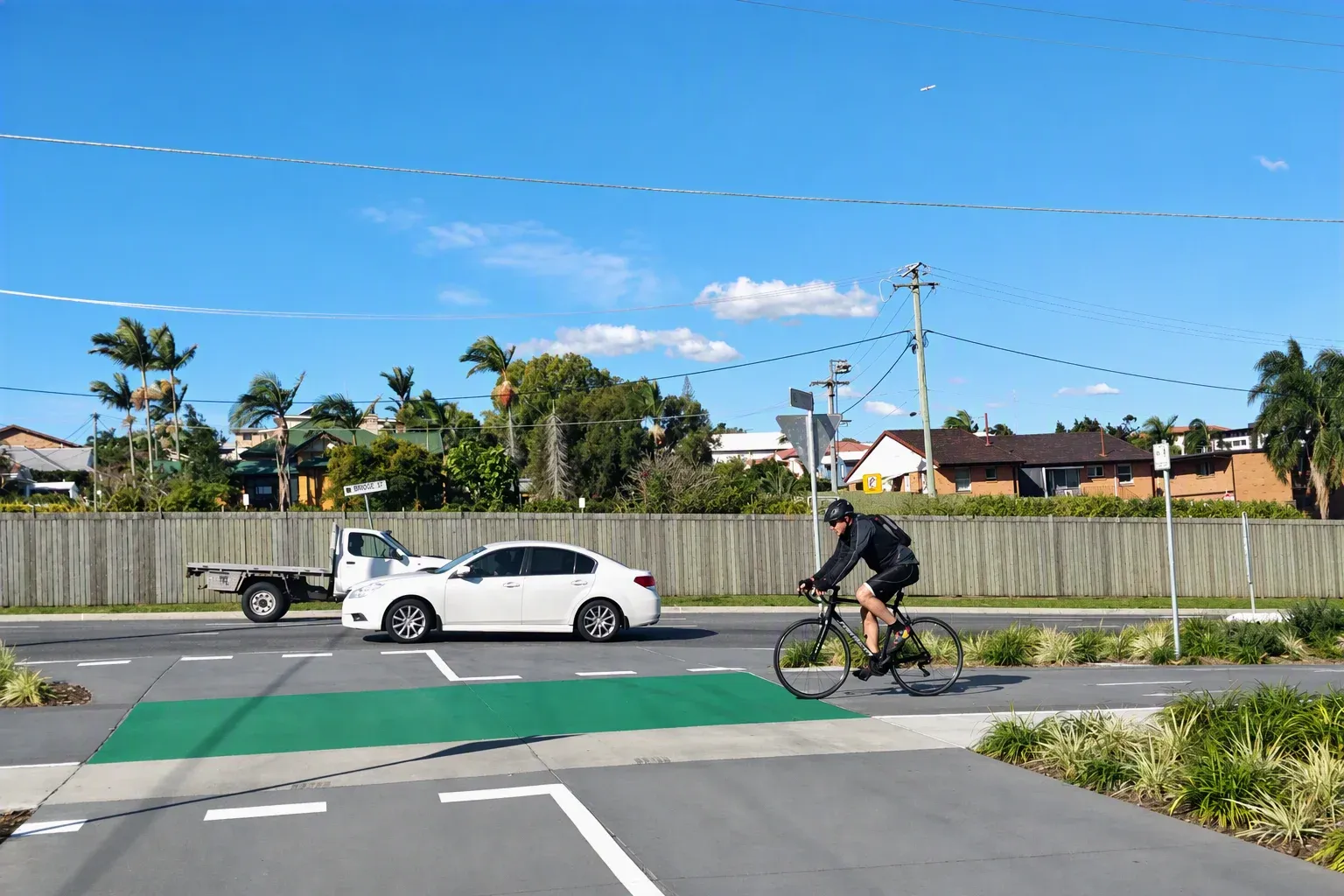
Active transport trips behave differently from motorised travel as they aren’t constrained by congestion the way vehicle trips are. They are often assigned to the shortest path or not assigned at all, making it difficult to quantify infrastructure benefits. The use of a route choice model allowed for the representation of the dispersion of cycling trips, mimicking the behaviour observed in real life.
Approach
The team conducted a literature review to select the donor model and worked with TMR staff in processing the network and implementing the model.
Outcomes
Outer Loop delivered a Proof of Concept Model that assigned cycling trips to South East Queensland’s bicycle network, along with the source code that enabled TMR to continue the development into a multi-year active transport modelling program.